Audrius Plioplys
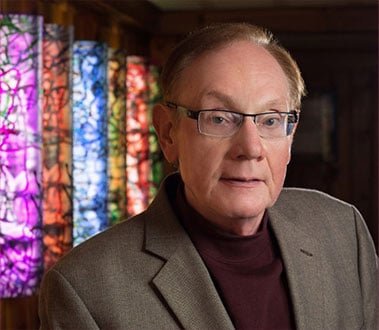
Meet Audrius
Location: Chicago, Illinois
Preferred medium: Mixed media
About me: For over 40 years, I have been both a professional artist and a neurologist-neuroscientist. My artwork is neo-conceptual: A metaphorical investigation of thinking and consciousness. I have transformed the art studio into a neurobiology research laboratory to merge neuroscience with art.
About my art:
Artistic approaches have included large scale paintings, prints on paper, site-specific installations, and light sculptures with LED light systems. The underlying images are of my own previous art works. I transform them into exotic forms, just as our memories transform visual impulses into vast neuronal web-works. Multiple layers are assembled, modified and blended. Cerebral cortical neuronal drawings, superimposed and subtracted from the surrounding color, reveal deeper layers of thoughts and memories. My own MRI brain scans and electroencephalograms (brain waves) are interweaved. From neuronal complexity, words, thoughts and consciousness emerge.
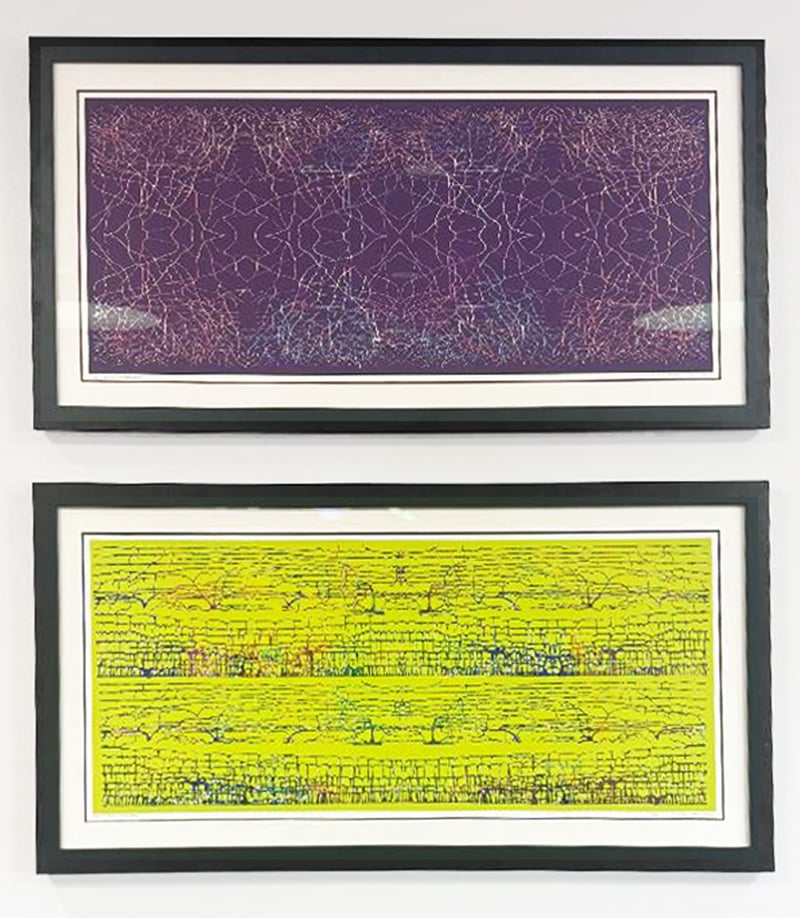
Non-Isolation / Displacement (purple piece)
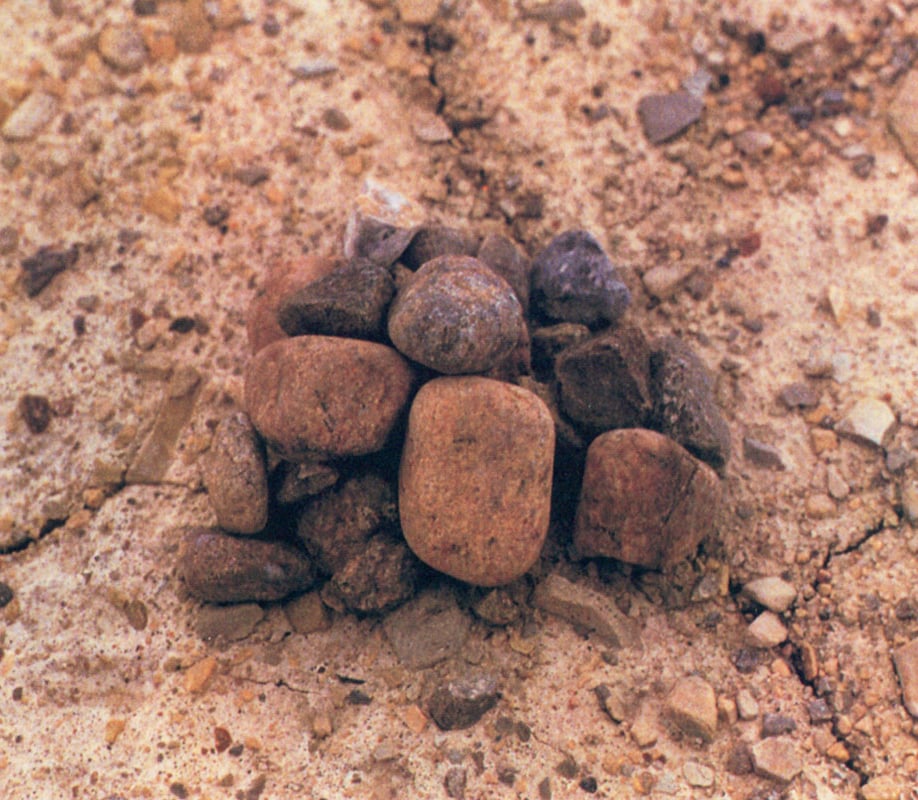
I transported several handfuls of stones from Ellesmere Island to Victoria Island in the high Canadian Arctic and left them there. A photograph of these stones underlies the neuronal pattern seen in this artwork. This was a meaningless displacement, just as my own family was meaninglessly displaced from Europe to North America because of World War II.
Burial Rites / Symphony (yellow piece)
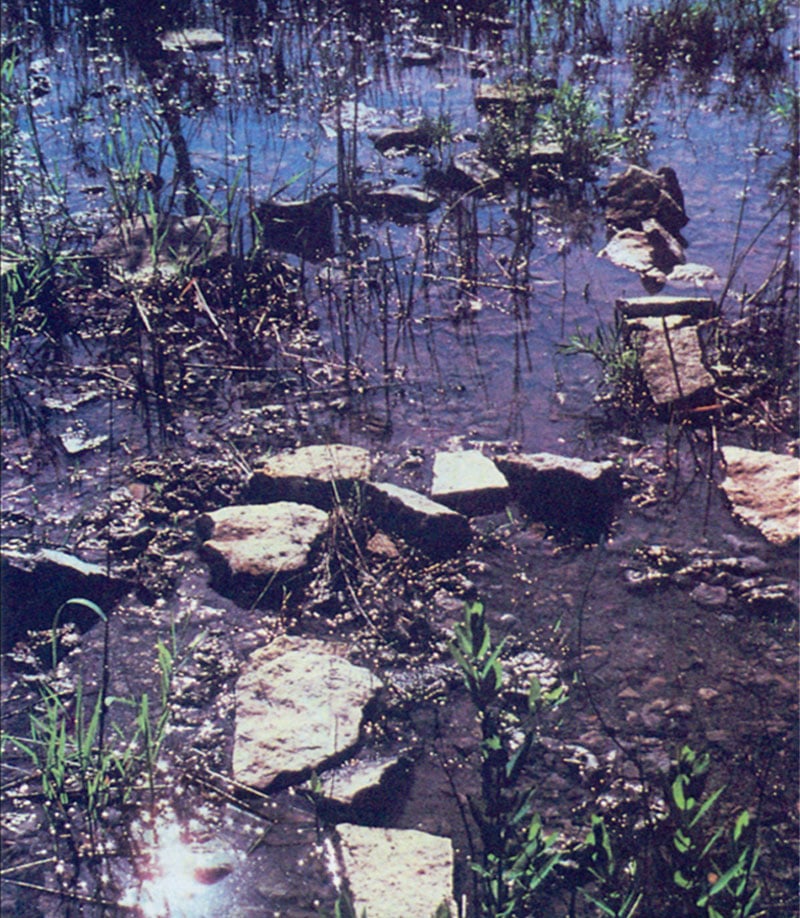
During my neurology residency at the Mayo Clinic, one Saturday morning I was jogging through Quarry Hill Park in Rochester, Minnesota. The quarried area was flooded from a storm the night before. I placed stones in a 50-foot-wide pattern analogous to ancient Lithuanian burial sites. A photograph of this outdoor installation serves as the basis for this symphonic artwork.
When did you begin your art career?
Artistically, I am fully self-taught. The seed of art was planted by a childhood friend in Toronto. During medical school at the University of Chicago, I started painting, and the passion for art grew uncontrollably. After internship, I left medicine entirely, to create art full-time. Three years later, after many exhibits and positive critical reviews, I started to feel guilty that I was not helping others with my knowledge of neurology. I realized that I must return to medicine, and at the same time, merge my art with neuroscientific investigations.
What inspires you to create art and did anything specifically inspire the art we have in our collection?
I have had well over 50 individual art exhibits and participated in over 100 group shows. In Chicago, my art is on permanent display at the Illinois Institute of Technology, University of Chicago, Blackstone Hotel, Rockefeller Memorial Chapel, Brookfield Zoo, and Beverly Arts Center. In Minneapolis, eight pieces, including large scale ones, are on permanent display at the American Academy of Neurology, which opened recently. My paintings are in many museum collections internationally including the Art Institute and the Museum of Contemporary Art, both in Chicago. A suite of my art books are displayed in a modern art museum near Marseilles, France. My installation piece, Mirror Neurons, graces the cover of the Oxford University Press book, Consciousness and the Social Brain. Most recently, the University of Chicago requested that I donate four of my light columns for permanent display. In thanks the University honored me by naming the three-story entrance way of the Institute on the Formation of Knowledge, where these pieces are displayed, after me.
What is your connection to the neurosciences? What does your art mean to you?
For over 40 years I have been both a professional artist and a neurologist-neuroscientist. My art is neo-conceptual: a metaphorical investigation of thinking and consciousness. I have transformed the artist's studio into a neurobiology research lab, merging neuroscience with art. I have been artistically exploring the origins of thinking, thought and consciousness. Where does awareness come from? How is it that we are cognizant of ourselves and of those near us? What is it that makes us human?
What do you hope people feel, think, or learn from your art?
I hope that the viewers find visual pleasure in the images themselves, and that these artworks inspire wonderment about the miraculous complexity of our central nervous system.