


Welcome

We understand that when your child is sick or injured, you want him or her to feel better as soon as possible. At Cook Children's Emergency Department, we want the same. We want to help you understand what to expect, so your visit is as comfortable as possible.
Cook Children's Emergency Department team is specially trained to treat children with serious illnesses and injuries. As a Level II trauma center, we provide 24-hour pediatric and surgical care with access to experts from more than 60 specialties.
Our Child Life specialists, Spanish-speaking translators and social workers are here to help answer your questions and comfort your child. And we'll connect you with any specialty or follow-up care needed when your child is ready to go home.
Driving directions
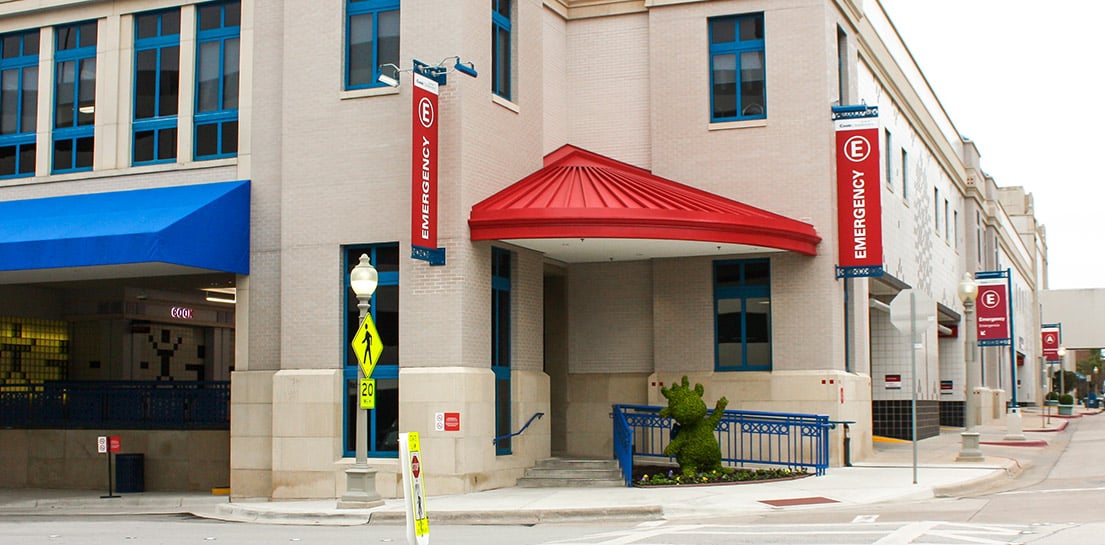
Cook Children's Emergency Department is located at 886 6th Ave. in Fort Worth. If you're driving, park across the street in the garage at the southwest corner of 6th and West Terrell Avenue. It has an "emergency parking" sign above the entrance.
Once you cross the street, walk toward the red and white “emergency” signs. Our department's entrance is under the red awning.
Your visit
How busy are we?
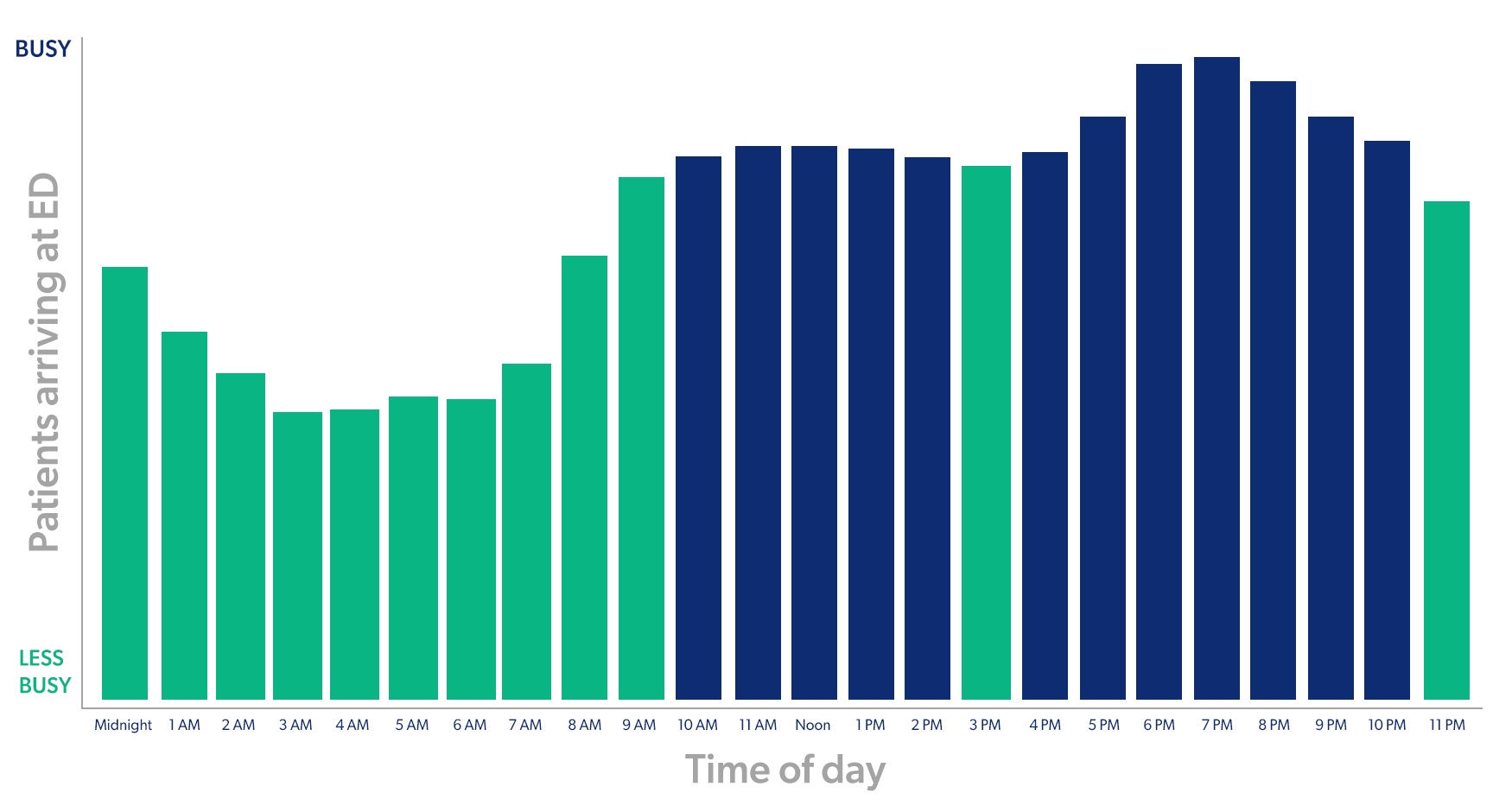
We understand that a trip to the emergency department can be a stressful time for your family. Your child's health is our highest priority, and we want to ensure you have the information you need. While we always see patients based on the seriousness of their injury or illness, knowing when our emergency department is typically less busy might help you plan. We've created a graph below showing how busy we get at different times in the day.
What to expect when checking in
When you check-in, we’ll ask you some brief questions and take a quick look at your child. This is called triage and is when we’ll take your child’s temperature, blood pressure and listen to your child’s heart and lungs.
We will ask:
- Why are you here?
- Does your child have other medical problems?
- What medicines does your child take?
- Does your child have any allergies?
Your child will then go to an ED exam room or back to the waiting room. If all exam rooms are full, you may need to return to the waiting room.
While in the waiting room
- Tell us immediately if your child is getting sicker.
- Do NOT let your child eat or drink unless we tell you it’s OK.
- Please check with us before taking your child to the bathroom. We may need a urine sample.
Registration
We may register you at the registration desk or in your child’s room.
We need to know your:
- Address
- Phone number
- Insurance information
At this time, let us know if you have other questions, including financial concerns, transportation, etc.
Treatment
Getting tests if the exam rooms are full
We may start tests or treatments while you’re still in the waiting room.
We’ll take your child to a special room for testing.
A Child Life specialist is usually available to help your child cope with diagnoses, medical procedures and stress.
If all of the exam rooms are still full, you may return to the waiting room after the tests or treatments.
Going into an ED exam room
This is when a doctor will look at your child and possibly order more tests or treatments. Nurses, paramedics, respiratory therapists or patient advocates also may help care for your child.
While we’re waiting for lab work or other test results, we are watching your child to see how any medicines or treatments are working.
Please ask us any questions during your visit. We are here to help. If you don’t understand our answers, let us know.
Going home
We will give you discharge instructions.
- We will tell you what signs or symptoms to look for at home.
- We will explain what to do if you have a problem and when to return to the ED.
To make sure we have explained this in a way that makes sense, we’ll ask you to tell us in your own words:
- What you need to know about your child’s health problem.
- What you need to do.
- Why doing this is important.
Education
In Cook Children's service area, 1 in 8 children received emergency care for an accidental injury. We encourage you to learn about the leading causes of accidental injury and help us in keeping our children safe, healthy and happy.
Hours
| Sunday | Open 24 hours |
| Monday | Open 24 hours |
| Tuesday | Open 24 hours |
| Wednesday | Open 24 hours |
| Thursday | Open 24 hours |
| Friday | Open 24 hours |
| Saturday | Open 24 hours |

