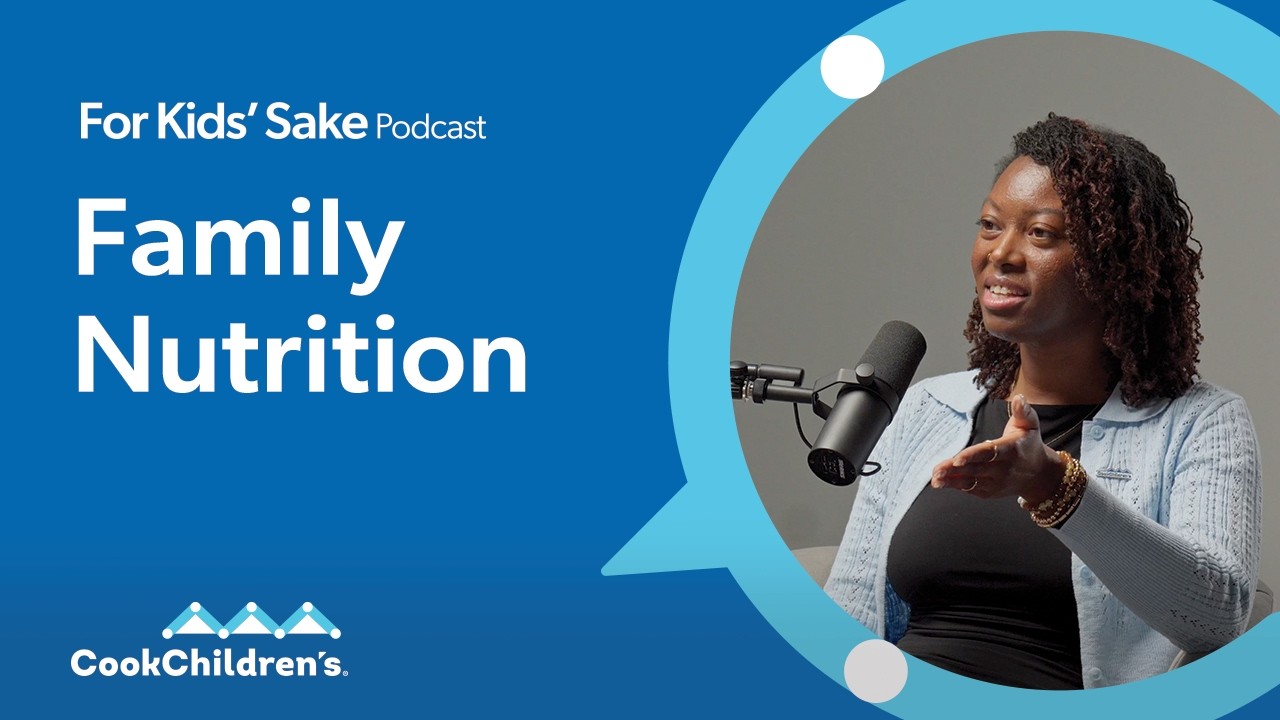
Family nutrition made simple
Maya Rashad, MPH, RDN, LD
Navigating the parenting journey
Welcome to For Kids’ Sake! The weekly podcast about all things kids, featuring top pediatric experts tackling real-time topics for today’s families.
For Kids’ Sake
Skip to content

Raising kids is an incredible adventure, but let’s be honest, kids don’t come with a handbook. From those first little cries and sleepless nights to the toddler tantrums and teen health, questions are bound to come up. When they do, we’re here to help!
Each episode delivers the trustworthy health information you need to be informed, supported and confident when making decisions about your child’s health and wellbeing.
Families come in different shapes, sizes and combinations. If only there was a manual with up-to-date information to help raise healthy, happy kids in today’s world. Well … now there is. Except instead of reading through pages in a guidebook, you’ll hear from Cook Children’s top pediatric professionals sharing about what matters, and what doesn’t! Our guests include:
- Pediatricians
- Specialists
- Behavioral health experts
- Nutritionists
- Injury prevention experts
- And more!
The topics we cover
Listen up as guests share topics on:
- Trending health issues
- Practical guidance on children's health
- Milestones
- Safety and wellness
- Education
- Behavioral health
- Parenting tools and resources
- Managing illnesses
We’ll also cover ages and stages:
- Newborns
- Toddlers
- Preschoolers
- School-age kids
- Preteens
- Teenagers
Listen and watch your way!
You’ll find us wherever you get your podcasts.
 Apple Podcasts
Subscribe.
 Spotify
Listen and watch now.
 YouTube
Watch episodes.
 Instagram
Follow us and ask questions.
Take a peek inside our podcasts
Here’s a fresh take on the guests you’ll meet. We’ll introduce you to Cook Children’s physicians, specialists and clinicians and discuss the challenges and rewards of parenting... And speaking of fresh, new episodes are published every week, so there’s always more to learn. And don’t worry if you miss one, all our podcast episodes are available on our For Kids’ Sake YouTube channel.
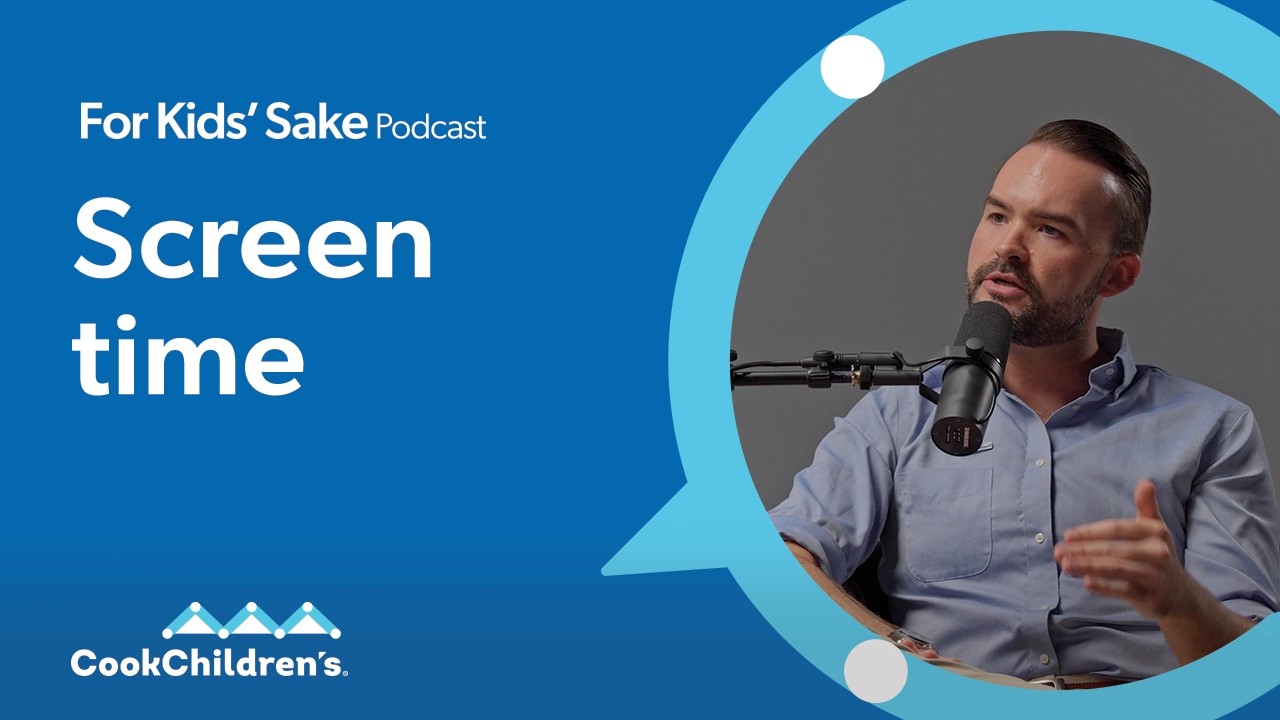
Screen time, smartphones and healthy digital habits
Dr. Austin Greenhaw
Family Nutrition Made Simple | Maya Rashad, MPH, RDN, LD | For Kids\' Sake Podcast | Cook Children's
With nutrition advice flooding social media feeds, many caregivers feel overwhelmed about where to start. In this episode of For Kids' Sake, Maya Rashad, MPH, RDN, LD, nutrition coordinator at Cook Children’s, shares practical strategies people can use to build healthy eating habits together as a family. From healthy snacks and picky eaters to grocery budgets and cooking with children, the conversation focuses on simple, sustainable approaches to nutrition and family meals. Here's an edited Q&A version of the discussion.
Q: If families could focus on just one nutrition habit, what would it be?
Rashad: Start by eating together more often. Family meals allow caregivers to model healthy habits and teach children about nutrition in a natural way. When families eat together regularly, children learn what balanced meals look like and are more likely to carry those habits with them outside the home. The specific meal doesn't matter. Choose whichever works best for your family and schedule.
Q: What makes a healthy snack?
Rashad: Snacks aren't bad. They should simply help children meet their nutrition goals.
A good snack includes:
- A fruit, vegetable or whole grain
- Ideally two food groups
- A combination of carbohydrates and protein for staying power
For example, popcorn and nuts can provide both fiber and protein while helping kids feel fuller for longer.
Q: How can families avoid being influenced by unhealthy food marketing?
Rashad: Food companies do an excellent job marketing products to children. Bright packaging and well-loved characters can make certain foods appealing, but caregivers can make healthy foods fun too. Using fruit and vegetable cutters, creating playful presentations and involving children in food preparation can make nutritious options more exciting without relying on packaged snacks. Just because a food is healthy, doesn’t mean it has to be serious.
Q: What if families don't have time to prepare everything from scratch?
Rashad: Don't be afraid of convenience. Healthy eating doesn't require homemade pasta and sauces and scratch-made meals every night. Convenience items can be part of a healthy routine.
Examples include:
- Rotisserie chicken
- Frozen vegetables
- Microwavable whole grains
- Prepackaged healthy snacks
The goal is to combine convenience with nutritious additions to create meals that fit real life.
Q: Is healthy eating always more expensive?
Rashad: Not necessarily. Canned and frozen foods are often affordable, nutritious options.
Frozen vegetables are typically harvested at peak freshness and frozen immediately, which can preserve nutrients, oftentimes meaning it has more nutrients than fresh produce. Canned foods can also fit into a healthy eating plan, especially when choosing low-sodium versions or rinsing canned products before use.
Another budget-friendly strategy is incorporating more plant-based foods such as:
- Beans
- Lentils
- Plant proteins
Families can even stretch grocery budgets by combining lentils with ground beef in recipes.
Q: What should families know about food safety?
Rashad: Practice basic food safety without avoiding fruits and vegetables altogether.
Good habits include:
- Washing hands before food preparation
- Washing hands after using the bathroom
- Properly cooking foods when appropriate
Families shouldn't allow concerns about foodborne illness to discourage fruit and vegetable consumption.
Q: Why is it important to involve children in cooking?
Rashad: Kids can begin helping in the kitchen much earlier than many people think.
Even children as young as two years old can participate by:
- Rinsing produce
- Removing stems from fruits
- Assisting with simple food preparation
Cooking builds confidence, teaches life skills and helps children develop a healthier relationship with food.
Q: How many times should a child be exposed to a food before deciding they don't like it?
Rashad: Research shows it can take 10 to 15 exposures. Exposure doesn't mean eating the food every time. Simply seeing it, helping prepare it or having it on their plate counts. Caregivers should:
- Remain patient
- Stay positive
- Ask questions
- Avoid pressure
Treat unfamiliar foods with curiosity rather than frustration. If a child doesn’t want to eat something and ask them why and turn it into a conversation.
Q: What's the biggest nutrition myth parents should know?
Rashad: Nutrition isn't supposed to be perfect. Many caregivers focus too much on perfection when consistency matters more. A healthy pattern includes:
- Variety
- Small sustainable changes
- Flexibility
- Grace for yourself and your family
Final Thoughts?
Rashad: Nutrition should be a family affair. The more families involve children in meal planning, cooking and conversations about food, the more likely healthy habits will stick for the long term.
Podcast: For Kids’ Sake
Episode number: 3
Topic: Screen Time
Guest: Austin Greenhaw, M.D.
Recording Date & Time: July 31, 2026 at 1 p.m.
Publication Date: August 24, 2026
COLD OPEN
****PICK BEST CLIP/SOUNDBITE***
{***CHELSEA***}
WELCOME TO FOR KIDS’ SAKE.
I’M CHELSEA KRETZ HOWELL.
TODAY WE’RE TALKING TO COOK CHILDREN’S CHILD PSYCHIATRIST DR. AUSTIN GREENHAW ABOUT ALL THINGS SCREENS.
THANK YOU FOR JOINING US!
{***GUEST***}
Guest responds
{***CHELSEA***}
LET’S START WITH ONE QUESTION EVERY CAREGIVER ASKS: HOW MUCH SCREEN TIME IS TOO MUCH?
{***GUEST***}
Guest responds
{***CHELSEA***}
EVEN INFANTS SEEM FASCINATED BY SCREENS. WHY DO THEY CAPTURES A CHILD’S ATTENTION SO QUICKLY?
{***GUEST***}
Guest responds
{***CHELSEA***}
WHAT ARE THE BIGGEST CONCERNS OF EXCESSIVE SCREEN USE?
{***GUEST***}
Guest responds
{***CHELSEA***}
MANY SCHOOLS NOW RELY ON LAPTOPS IN THE CLASSROOM. HOW CAN CAREGIVERS BALANCE EDUCATIONAL SCREEN TIME WITH RECREATIONAL SCREEN TIME AT HOME?
{***GUEST***}
Guest responds
{***CHELSEA***}
HOW CAN CAREGIVERS TELL WHEN SCREEN USE IS BECOMING A PROBLEM RATHER THAN JUST A NORMAL PART OF GROWING UP?
{***GUEST***}
Guest responds
{***CHELSEA***}
WHAT EFFECT DOES OUR OWN SCREEN TIME HAVE ON OUR KIDS?
{***GUEST***}
Guest responds
{***CHELSEA***}
IF A FAMILY FEELS LIKE SCREENS HAVE TAKEN OVER THEIR HOME, WHERE SHOULD THEY START?
{***GUEST***}
Guest responds
{***CHELSEA***}
THIS QUESTION IS FOR A SEGMENT WE CALL “ASKING FOR A FRIEND” WHERE LISTENERS SUBMIT ANONYMOUS QUESTIONS THEY MAY BE TOO AFRAID TO ASK...
HERE’S THE QUESTION...
OPTION 1 – IS IT AWFUL IF SCREEN TIME IS SOMETIMES THE ONLY WAY I CAN GET DINNER MADE, ANSWER EMAILS, OR JUST MAKE IT THROUGH THE REST OF THE DAY?
OPTION 2 – IF MY CHILD GETS UPSET EVERY TIME I TAKE AWAY A DEVICE, DOES THAT MEAN WE HAVE A SCREEN-TIME PROBLEM?
OPTION 3 – I HAVE A REMOTE WORK SCHEDULE, WHICH IS GREAT FOR SPENDING MORE TIME WITH MY YOUNG KIDS; HOWEVER, THEY OFTEN SEE ME WORKING ON MY LAPTOP OR ANSWERING CALLS AND EMAILS ON MY WORK PHONE. THEY ARE UNDER THE AGE OF 4 AND IT CAN BE HARD TO EXPLAIN WHY MOMMY IS ON HER COMPUTER/PHONE. WHAT'S YOUR ADVICE FOR PARENTS WHO FEEL GUILTY ABOUT THAT?
{***GUEST***}
Guest responds
{***CHELSEA***}
AND FINALLY – WE WILL END ON A LIGHTNING ROUND...
**GUEST RESPONDS TO EACH**
- ONE SCREEN-TIME RULE EVERY FAMILY SHOULD HAVE?
- WHAT'S ONE SIGN A CHILD MAY NEED A BREAK FROM SCREENS RIGHT NOW?
- TRUE OR FALSE: EDUCATIONAL CONTENT GETS A FREE PASS ON SCREEN-TIME LIMITS.
- WHAT'S ONE APP, FEATURE, OR SETTING MORE PARENTS SHOULD KNOW ABOUT?
- FILL IN THE BLANK: “THE BIGGEST MYTH ABOUT SCREEN TIME IS ______.”
- WHEN SHOULD A CHILD GET THEIR FIRST PHONE?
{***CHELSEA***}
- GREENHAW, THANK YOU SO MUCH FOR JOINING US.
LET’S CONTINUE THE CONVERSATION ON OUR SOCIAL MEDIA ACCOUNTS AND ONLINE!
TO FIND MORE INFORMATION ABOUT THIS TOPIC OR ANYTHING ELSE WE TALK ABOUT ON THIS SHOW, VISIT CHECKUP NEWSROOM DOT COM. OR, TO BOOK AN APPOINTMENT, HEAD TO COOK CHILDRENS DOT ORG.
Meet our hosts
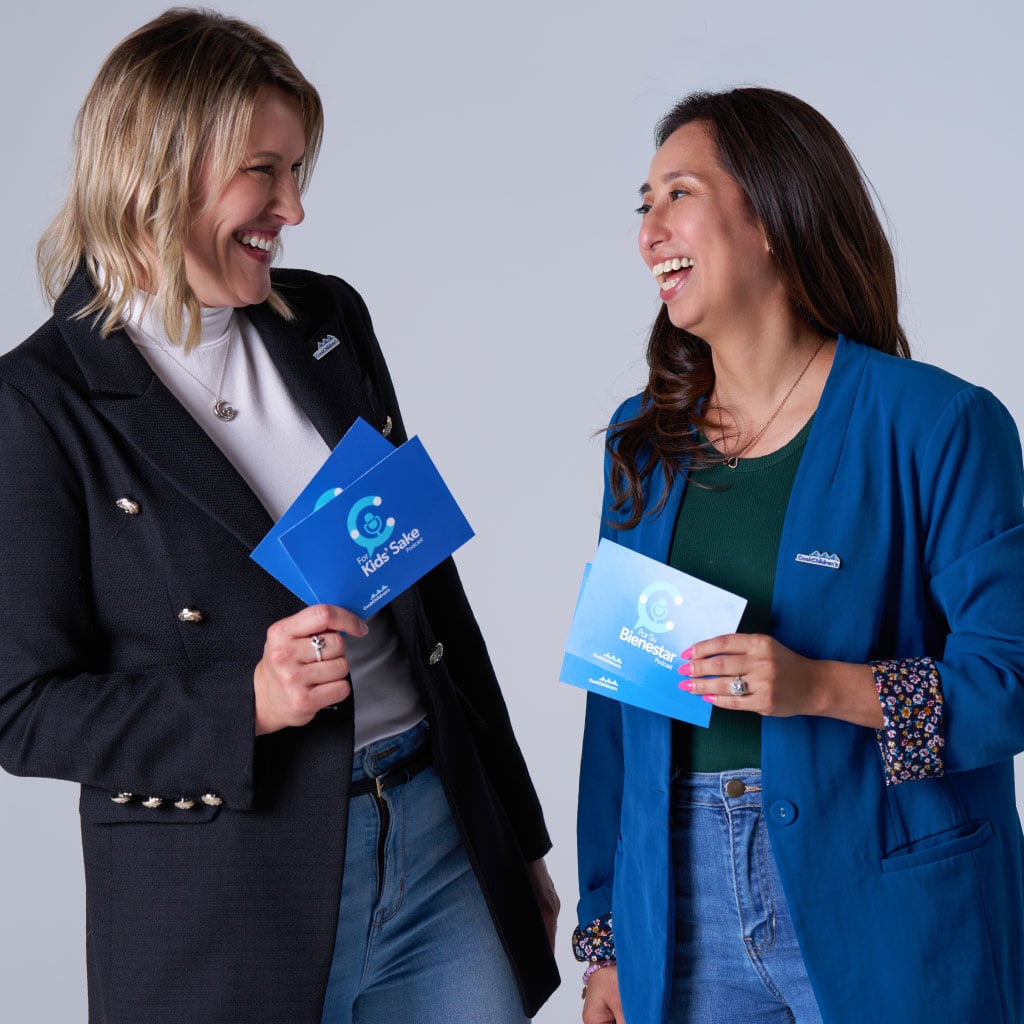
Meet Chelsea Kretz Howell, host of our For Kids’ Sake podcast and Lourdes Vazquez, host of our Spanish-language companion Por Su Bienstar. Trust us, they ask good questions. Want to know why? They both spent years as broadcast journalists in the Dallas/Fort Worth market covering everything from breaking news, sports and the community stories that matter.
Chelsea's career spans from journalism and advertising to strategic communications in law enforcement and health care. Lourdes brings more than a decade of bilingual journalism experience, informing and educating diverse communities in English and Spanish on a wide range of topics, including health care.
Chelsea and Lourdes explore topics and build relationships with Cook Children's subject matter experts alongside their colleagues within the Marketing and Communications department. Together, the team is bringing answers to you. Not from a handbook, but from the experts who understand all things kids.
Have a topic request for Chelsea or Lourdes? Let us know!